
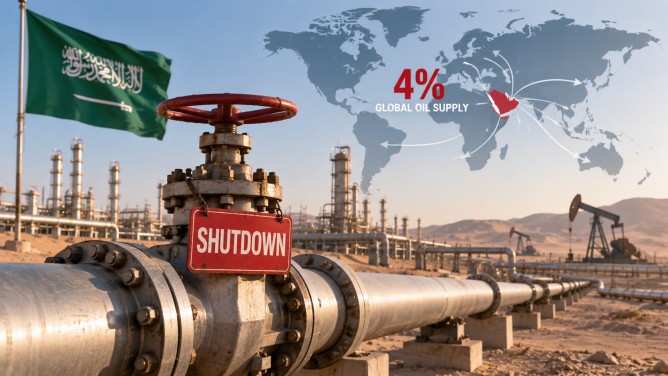
Saudi Arabia has temporarily suspended operations of its significant East-West oil pipeline following an attack, intensifying concerns over global oil supply stability. The shutdown comes amid increased territorial advances by Iran-backed Houthi forces along Yemen’s Red Sea coast, a strategic area that could further threaten regional oil shipments.
The Houthis have secured control over key territories near the Red Sea and the Bab el-Mandeb Strait, a crucial maritime passage connecting the Red Sea with the Gulf of Aden. This development heightens fears about the security of oil transportation routes. In response to an attack on September 11, Saudi Arabia closed its 1,200-kilometer East-West pipeline on September 12 as a precaution. This pipeline is critically important for Saudi Arabia as it enables the transport of crude oil from its eastern production areas to the Red Sea, offering an alternative export route if the Strait of Hormuz encounters disruptions.
Saudi Arabia had previously increased exports via its Red Sea facilities due to significant disturbances in the Strait of Hormuz amid the US-Iran conflict. The recent attacks could exacerbate the Kingdom’s challenges in delivering crude oil to international markets. Industry insiders warn that an extended closure of the pipeline might substantially reduce the amount of oil available on global markets. Given that Brent crude prices have already surpassed $100 per barrel due to rising Middle East tensions, the potential disruption is troubling.
If disruptions continue to affect both the Strait of Hormuz and the Bab el-Mandeb Strait, the global energy supply could face significant challenges, potentially leading to increased transportation costs and higher crude prices. Such a scenario could contribute to inflation in major economies as fuel, transportation, and production costs rise. Countries heavily reliant on energy imports might experience additional strain on their trade balances and currency values.
The length of the Saudi pipeline’s closure and the evolving security dynamics around the Red Sea and Strait of Hormuz are critical factors that will influence the global oil supply and energy markets moving forward.