
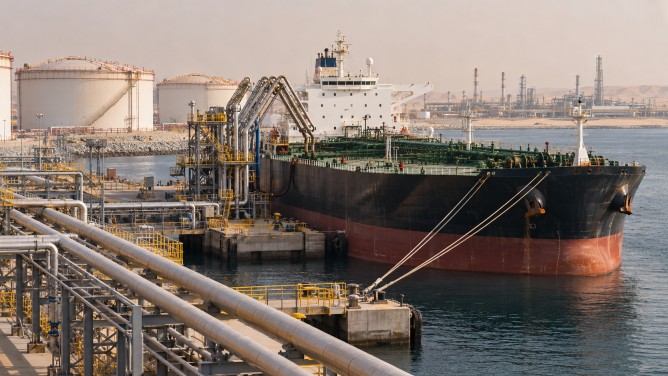
Global oil prices experienced a decline on Tuesday, primarily driven by an anticipated supply surplus that has overshadowed concerns over geopolitical tensions in the Gulf region. Brent crude futures decreased by 0.8% to $91.66 per barrel, while US West Texas Intermediate (WTI) crude saw a 0.9% drop to $84.99 per barrel.
The downward trend in prices is largely attributed to the recovery of oil exports from the Middle East, which has alleviated fears of global supply shortages. The International Energy Agency (IEA) has suggested that the global oil market might return to a supply surplus by the fourth quarter of 2026, as exports recover at a faster pace than demand increases.
Despite this optimistic outlook, the ongoing tensions between the United States and Iran continue to threaten global energy security. Recent attacks on US military bases in Bahrain and disruptions in the Strait of Hormuz have raised alarms about the safety of one of the world’s most crucial oil transit routes. As a result, oil shipments through the Strait of Hormuz remain significantly below pre-conflict levels, underscoring persistent vulnerabilities in global energy trade.
In parallel, the Organization of the Petroleum Exporting Countries (OPEC) has convened to assess its members’ maximum sustainable oil production capacities, a review that will influence future production quotas for 2027 and beyond. The extended OPEC+ group is slated to meet on November 29 to deliberate on its production policy moving forward.
Meanwhile, the United States’ crude oil reserves in the Strategic Petroleum Reserve have fallen to 276.4 million barrels, marking their lowest point since August 1982. This decline follows recent releases aimed at stabilizing global oil supplies.