
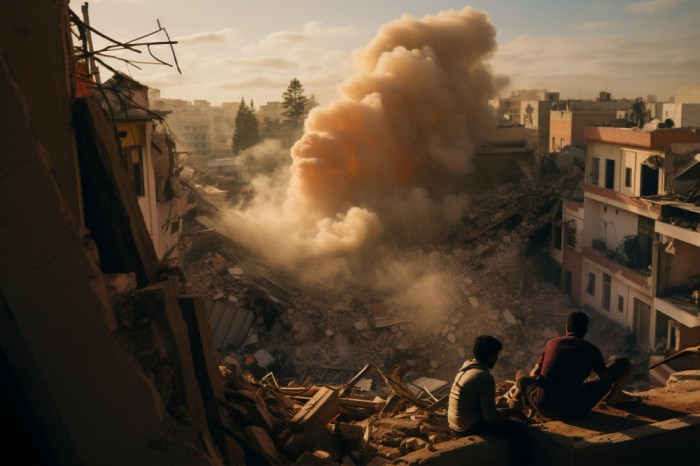
The already fraught relationship between the United States and Iran has escalated further following a series of reciprocal military strikes. The US military conducted attacks on Iranian targets, specifically targeting air defense systems, drone facilities, and surveillance infrastructure. These actions came as a response to an assault on a commercial vessel navigating the strategic Strait of Hormuz. US officials emphasized that these strikes were a protective measure against perceived Iranian threats within this crucial waterway.
In retaliation, Iran’s Islamic Revolutionary Guard Corps launched missile and drone strikes targeting US-linked military facilities in the Gulf region, specifically in Kuwait and Bahrain. According to Iranian sources, the attacks struck several objectives, including a US air base in Kuwait and a naval installation in Bahrain. However, these claims remain unverified by independent sources. Authorities in Kuwait and Bahrain reacted to these incidents by raising security alerts, deploying defense mechanisms, and advising residents to seek safety.
The recent military exchanges have heightened concerns over the potential collapse of the tenuous ceasefire between Washington and Tehran. This escalation follows earlier US military operations targeting Iranian sites connected to the enduring tensions in the Strait of Hormuz. Given its role as a critical conduit for global energy supplies, the waterway remains a focal point of conflict between the two nations.
US President Donald Trump has accused Iran of breaching the ceasefire agreement, cautioning that further military actions might ensue if hostilities persist. Contrarily, Iran has attributed the rising tensions to actions taken by Washington, asserting that the US has violated existing agreements. The situation continues to develop, with both nations standing firm in their respective positions.