
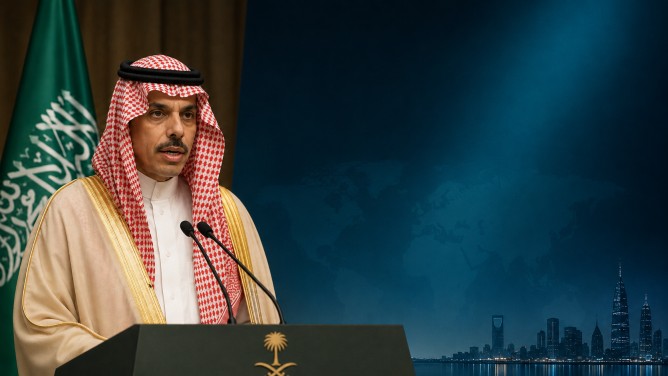
At a G20 finance meeting in the United States, Saudi Arabia’s Finance Minister, Mohammed Al-Jadaan, urged the international community to enhance economic resilience and bolster defenses against future global disruptions. Highlighting the growing vulnerabilities in the global economy, Al-Jadaan advocated for economies to improve their ability to absorb shocks by diversifying production sources, maintaining sufficient inventories, and ensuring that critical infrastructure has the necessary spare capacity.
Al-Jadaan emphasized the importance of policies that promote robust and sustainable long-term economic growth. He advised governments to identify and address key constraints affecting growth and to adapt their policies in response to changing economic conditions. Addressing global economic imbalances, Al-Jadaan called for a thorough assessment of trade surpluses and deficits, taking into account domestic financial conditions and structural factors that influence individual economies.
He also highlighted the need for a more coordinated international approach to sovereign debt, stressing that governments should not only react to debt crises but also work to prevent the accumulation of debt that fails to yield sustainable economic or developmental benefits. This proactive approach, according to Al-Jadaan, is crucial for maintaining global economic stability.
Saudi Arabia’s Central Bank Governor, Ayman Al-Sayari, pointed to the Kingdom’s economic resilience, noting that inflation remained controlled despite external challenges, averaging 1.8% during the first seven months of 2026. He highlighted the expansion of Saudi Arabia’s non-oil economy, driven by structural reforms, increased private-sector participation, and investment. The Kingdom’s economic growth is further supported by domestic demand, a stable labor market, government spending, and ongoing development projects.
Al-Sayari acknowledged ongoing risks, such as geopolitical tensions and disruptions to global trade and energy flows. However, he noted that Saudi Arabia’s diversified logistics and energy infrastructure has mitigated the impact of these external disruptions. The nation’s overall unemployment rate fell to a historic low of 3.1% in the first quarter of 2026, with unemployment among Saudi nationals at 6.4%, underscoring the Kingdom’s robust economic performance.