
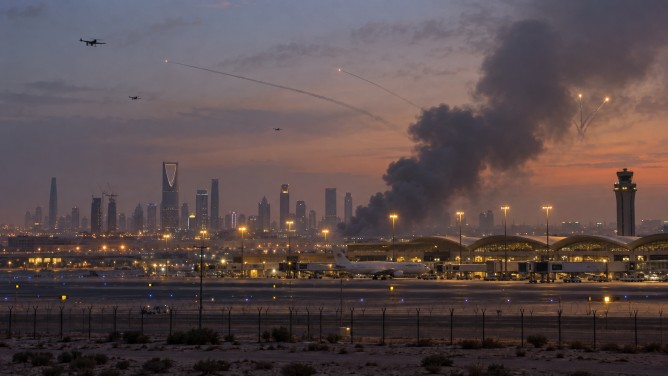
The recent escalation of missile and drone attacks by Yemen’s Houthi group against Saudi Arabia has sparked heightened concerns over the safety of civilian and energy infrastructure, as well as the security of vital shipping routes in the region. The assaults, which targeted sensitive sites in Riyadh and caused explosions near King Khalid International Airport, have forced Saudi authorities to issue air raid alerts for the first time since July.
In response to these developments, Saudi Arabia’s military coalition reported that its air defenses successfully intercepted a missile aimed at the capital and later issued an all-clear signal. Emergency crews were dispatched to a fire involving a fuel tank near the airport, although no further casualties or significant damage have been reported.
The Houthis have claimed responsibility for the attacks, describing them as retaliation for intensified Saudi military operations against their positions in Yemen. The group alleges that Saudi forces have conducted hundreds of airstrikes in recent days, exacerbating the already volatile situation.
The United Nations Security Council has condemned the Houthi attacks, emphasizing the need to protect civilian and energy facilities. The council also called for measures to prevent the group from acquiring additional weapons and military support, as the conflict threatens to disrupt the Red Sea and the Bab al-Mandab Strait, a crucial international maritime route.
Amid this backdrop, regional tensions involving Iran, the United States, and their respective allies continue to simmer. Washington has advised American citizens in the region to exercise increased caution, underscoring the broader implications of the ongoing conflict in Yemen.