The proposal to turn the Donbas into a “Free Economic Zone” (FEZ) has sparked a fierce debate within Ukraine. Critics of the plan, including many military commanders and nationalist politicians, view it as a “de facto surrender.” They argue that a zone without a Ukrainian military presence is simply a gift to Russia, allowing them to exert political and economic influence over the region without the cost of an active war.
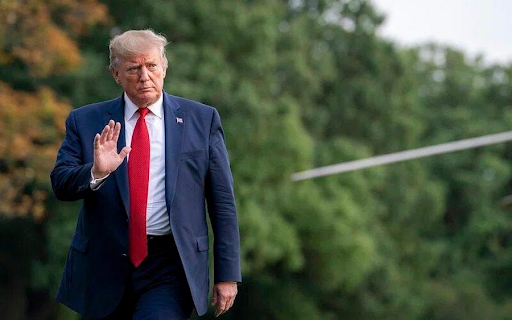
For the Trump administration, however, the FEZ is seen as a pragmatic way to “freeze” the conflict without forcing either side to officially renounce their claims. The idea is to create a “gray zone” where trade can resume, allowing the local population to rebuild their lives under international protection. The U.S. team believes that after a few years of peace and prosperity, the question of “whose flag flies over the city hall” will become less explosive.
President Zelensky’s “referendum” proposal is a direct response to this internal criticism. By putting the FEZ to a vote, he can claim he is following the will of the people rather than bowing to U.S. pressure. However, the logistics of holding a fair referendum in a war-torn region like Donetsk or Luhansk are nearly impossible. Who would be allowed to vote? The refugees who fled to Europe? The people currently living under Russian occupation? These questions could delay any deal for months.
Russia’s take on the FEZ is equally problematic. The Kremlin sees the Donbas not as a “zone of trade,” but as “historic Russian land.” They have already begun distributing Russian passports and integrating the local schools into the Russian education system. For Moscow, a “neutral” Donbas is a step backward from their current goal of total annexation. They may only agree to an FEZ if it is clear that Russian “police” will be the ones keeping the peace.
As the Miami talks continue, the “Free Economic Zone” remains the most creative, and most fragile, part of the peace plan. It is a classic “middle ground” that risks satisfying no one. If Witkoff and Kushner can’t sell this idea to the Russian delegation, they may be forced to choose between a full Ukrainian withdrawal or a continuation of the war well into 2026.
The Donbas Dilemma: Is a “Free Economic Zone” a Sell-out?