The western horizon holds special significance across Cornwall’s prehistoric landscape. As the boundary where earth meets sky and where the sun descends daily into darkness, it functioned as a liminal space embodying transitions, endings, and mysteries. The Land’s End peninsula, extending toward this significant horizon and aligned with winter solstice sunset, became a gateway landscape where communities engaged with profound cosmological concepts.
Geographical positioning amplified the peninsula’s gateway qualities. As Britain’s southwestern extremity, Land’s End represents the final terrestrial boundary before open ocean. Standing at monuments like Tregeseal circle and looking toward the setting sun means gazing across this boundary toward distant horizons where the Isles of Scilly flicker in and out of visibility like spirits inhabiting threshold spaces.
Cultural associations between western horizons and death appear across many societies, often relating to the setting sun’s daily descent into darkness. Cornwall’s prehistoric communities likely held similar beliefs, viewing the western horizon as a gateway to otherworldly realms. The winter solstice, when the sun reached its southern extreme along this horizon, would have represented a moment of maximum proximity to these supernatural domains.
Monuments positioned to mark winter solstice sunset functioned as architectural gateways mediating between earthly and cosmic realms. Standing within Tregeseal circle and watching the sun descend toward the Isles of Scilly created experiences of witnessing transitions between domains. The stone ring itself formed a threshold—stepping inside meant entering sacred space oriented toward the cosmic gateway marked by the setting sun.
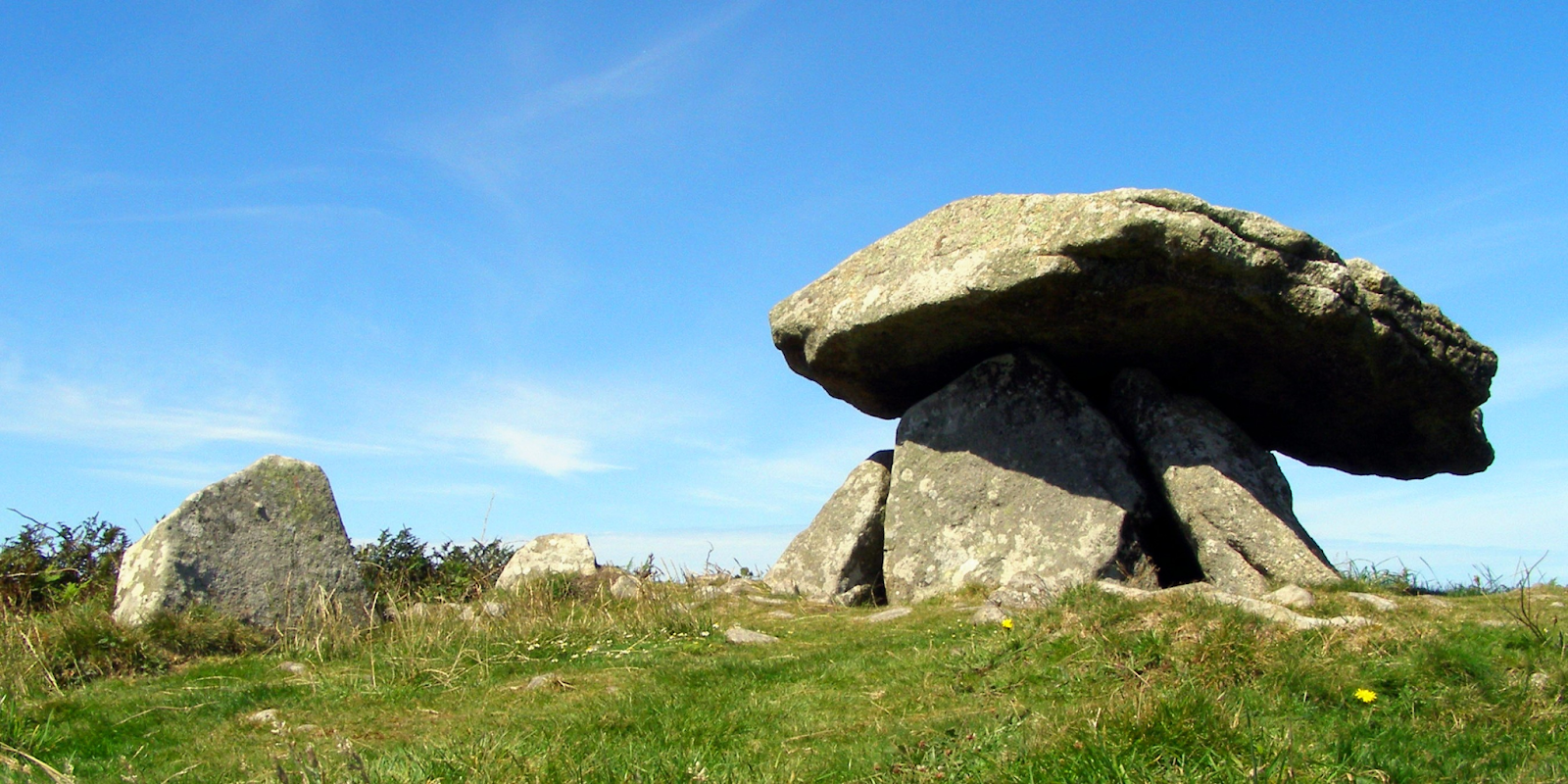
Chûn Quoit’s dual function as burial chamber and astronomical observation point reinforces gateway interpretations. The dead were positioned to witness eternally the sun’s journey toward the western horizon—placed at a threshold between life and death, maintaining watch over the cosmic gateway their community marked through monument construction.
The Kenidjack holed stones potentially functioned as passage gateways, with sunlight streaming through apertures creating pathways between stone and shadow, light and darkness. Though too small for human passage, these holes may have held symbolic significance as portals through which solar energy could flow, marking connections between celestial and terrestrial domains.
Contemporary engagement with these gateway landscapes includes both intellectual understanding and experiential participation. Research by Carolyn Kennett reveals how monuments functioned within prehistoric cosmological frameworks. The Montol festival’s torch-lit procession toward the sea enacts movement toward the western horizon where the winter sun sets. This combination of ancient monuments, scholarly interpretation, and living ritual demonstrates how Cornwall’s gateway landscape continues facilitating engagement with profound themes about boundaries, transitions, and the mysteries that lie beyond visible horizons.
Beyond the Horizon: Cornwall’s Ancient Gateway to the Setting Sun